Why Canada is unprepared for the Age of Unrest
Are you protected? Tactical intelligence and environmental design for a volatile world.
Strategic Friction
1/20/20266 min read
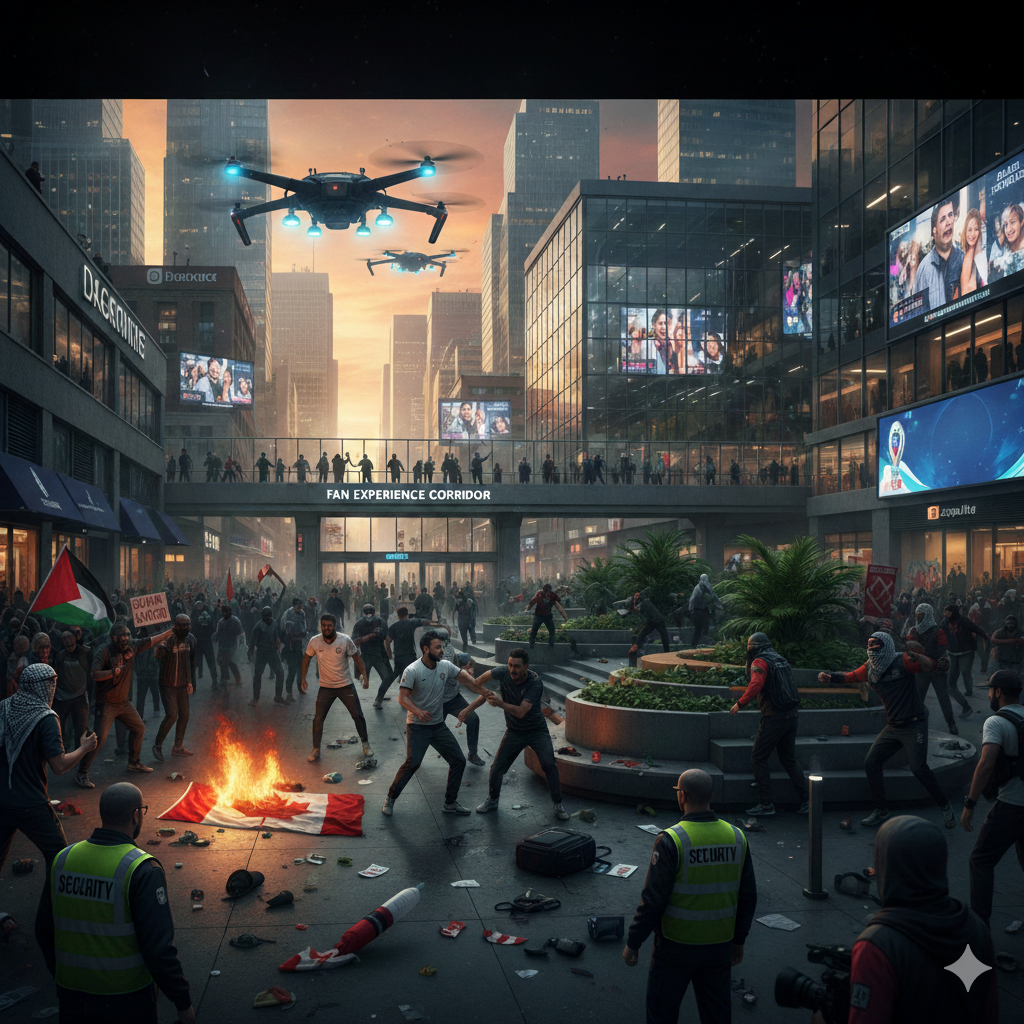
I can still smell the acrid scent of the police cruiser burning at King Street and Bay Street on that hot summer day in June 2010. It wasn’t just the cruiser that was on fire; it was the rule-book as I'd come to know it.
I found myself on the front-lines during the Toronto G20. Not as a police officer, but as a private security professional who suddenly had a front-row seat to the exact moment the "Perimeter of Order" collapsed. On Day 1, we didn’t suffer from a lack of equipment, manpower, or intelligence. We suffered from a paralysis of conviction. The police command center, hemmed in by political optics and the fear of "escalation," hesitated. That hesitation was blood in the water. It sent a clear signal to every extremist and anarchist in the city: The line is a suggestion, and the consequences are negotiable.
By Day 2, the response had stiffened. Coordinated resources between police and private security began to move in lockstep, re-asserting control over the city's downtown core. It was a refreshing display of what is possible when lack of conviction and "snowflake" politics is discarded in favor of strategic enforcement and a public safety first approach.
But the damage had already been done. A precedent was set; one that has continued to haunt Canadian public safety response ever since and is quickly reaching a fever pitch as we head in to what is looking to be a very volatile and unpredictable 2026.
The Emboldened Street: From Convoy to Conflict
If you think the G20 was an anomaly, you aren't paying attention to the current "Strategic Friction" on our streets. Since 2010, the "light on crime" attitude has metastasized. We’ve watched the "Trucker Convoy" paralyze the capital and shut down border crossings. We've seen extremists from both side of the political spectrum bring railways and supply lines to a halt. And most recently, increasingly violent protests across the country regarding the war in Gaza.
The steady progression towards violence started in 2025 and by the start of 2026 we are seeing a disturbing escalation from the days of colourful banners and screaming insults. What was once civil disobedience has evolved into physical intimidation and outright assault. Protesters who once wanted recognition and government action now openly scream for the death of Canada, burn Canadian flags, intimidate Canadian citizens and call for the death of Jews. At start of year protests in Toronto protesters even resorted to hurling bodily excrement and physically assaulting police officers and civilians alike.
Protests are no longer a tool of "expression"; but rather have become a tactical test of our collective resolve.
The problem now is that the agitators have learned. They know that in a polarized society, the side that acts with the most conviction wins. Meanwhile, our corporate boards and municipal leaders insist on sticking to outdated rules and operating under the delusion that "de-escalation" is a universal solvent for ideological rage.
World Class Pressure!
This summer, Canada will co-host the 2026 World Cup; the largest, most vibrant sporting spectacle in human history. Like the millions of fans preparing to descend on North America, I am genuinely excited for the energy and the game-day festivities.
But as a security professional, I see the shadow that corporate and municipal leaders either choose to ignore or simply don't appreciate: that the World Cup is also a global pressure cooker.
Think about the sheer scale of the tournament and the potential friction points. We are inviting 48 nations' worth of grievances, historical rivalries, and geopolitical tensions to converge on our doorsteps. From human rights debates to active international conflicts, every global fault line becomes a local security concern.
Exhibit A: The June 26th "Pride Match" in Seattle. The fixture features Iran and Egypt - two nations with notoriously anti-LGBTQ+ stances that have already signalled they will not support the initiative. Whether you personally agree with these nations is irrelevant to the security audit. The fact remains that tournament organizers, through aggressive virtue signalling, have allowed politics to supersede sport. "We" are the ones who escalated the risk. By forcing outside political agendas into a soccer match, we have turned a game into a lightning rod for targeted protest and physical confrontation.
Are we ready for the fallout?
In 2026, the gap between a "Safe City" and a "Smart City" has become a cavernous liability. We continue to prioritize the aesthetic of the "Urban Village"; vibrant, open, and hyper-connected; while systematically dismantling the physical foundations of public order.
The "Instagrammable" Blind Spot
Modern fan zones are increasingly engineered for the selfie, not the sight-line. In a bid to meet "wellness" and sustainability quotas, public squares are often cluttered with dense, tiered greenery, sculptural seating, and complex "climate-resilient" architecture.
While these features look great on a marketing brochure, they create perceptual isolation. By introducing high-contrast "visual noise" and low-light pockets, architects are effectively blinding the first line of defense: natural surveillance. In the high-density environment of a World Cup, these aesthetic barriers function as "staging zones" which can provide cover for agitators to mask their movements, cache prohibited items, or escalate a skirmish long before security personnel can even perceive a threat is forming.
The Transit Paradox: Efficiency vs. Exposure
Public transit remains the most logical and efficient way to move thousands of fans to a world-class event. When it works, it is the lifeblood of the "Urban Village." However, during a major event like the World Cup, that lifeblood is being threatened by a preexisting crisis: our transit systems are already grappling with unprecedented levels of violence and "swarming" incidents.
The corridors connecting transit hubs to stadiums are largely being re-branded as "Fan Experience Corridors"; opportunities to maximize and profit from fan experience. But while we encourage millions to use these veins of the city, we are also witnessing a rise in the "modern" transit hubs; sprawling geometries of multi-level glass and concrete that create countless hidden corners and "dead zones."
Without clear, unobstructed sight-lines, the urban geometry favors the aggressor. Today we still see transit hubs prioritize complex architecture over basic visibility despite proven approaches like Crime Prevention Through Environmental Design (CPTED) which show how important clear sight-lines can be in deterring unwanted behaviour.
These corridors can create hidden areas where a small, coordinated group can initiate a "swarming" attack or a targeted assault and vanish into the architectural maze before a response team can even mobilize.
When your transit environment lacks clear boundaries and visibility, you aren't just hosting fans; you’re providing cover for chaos. We are essentially funneling the public into high-efficiency corridors that double as high-opportunity zones for crime.
The "Stand Back and Observe" Paralysis
Most dangerously (and my biggest peeve about security); our current security posture has been hollowed out by a "light on crime" administrative philosophy. In an effort to avoid the optics of a "Police State," and potential liability (even when the victim is right) the directive has shifted toward passive observation.
Enforcement Gap: When security services and police are instructed to "monitor" rather than "intervene," they cede the conviction of the space to the most aggressive actors.
The Risk: This "snowflake" strategy fails instantly in the face of organized intimidation. By the time "observation" yields a decision to act, the tactical advantage has already shifted to the mob.
Techno-Nationalism & AI Amplification
This isn't just about what happens on the sidewalk; it's about the Algorithmic Riot. In 2026, we live in a state of Techno-nationalism, where digital sovereignty and physical security are one and the same.
The 20-Minute Riot: A minor scuffle in a poorly surveilled plaza is no longer local. AI-driven social algorithms—often manipulated by "Sovereign AI" actors looking to destabilize Western urban centers—can memeify a conflict in real-time.
The Risk: By the time a "stand back and observe" command center finishes their first briefing, the AI has already pushed a sensationalized, emotionally charged video to every phone in a 5km radius. A local scuffle becomes a city-wide contagion before the first police cruiser arrives.
The Corporate Cost of Softness
For major brands and property owners alike, the stakes have never been higher. In today's market, your physical presence is your brand. If your lobby becomes a staging ground for a mob because your security team was told to keep a low profile, you haven't just lost a window; you've lost the trust of your employees and your shareholders.
Neutrality is no longer a shield. In the age of Strategic Friction, the absence of a firm security posture is interpreted as a political statement of weakness.
The Path Forward
Stability is not a default setting. It is an engineered outcome.
To survive we must move beyond the "snowflake" consensus and re-embrace three core truths:
Conviction is Deterrence: If the line doesn't hold at the first sign of trouble, there is no line.
Design is Defense: If your building doesn't facilitate Security over asthetics, you are subsidizing your own vulnerability.
Intel is Proactive: We must vet tenants, associates, and "insider threats" with the rigor of a detective, not the checkbox of an HR clerk or the need to make the sale.
The ghosts of G20's past still roam Toronto and most modern cities for that matter, it’s time we put them to rest by choosing strategy over sentimentality.