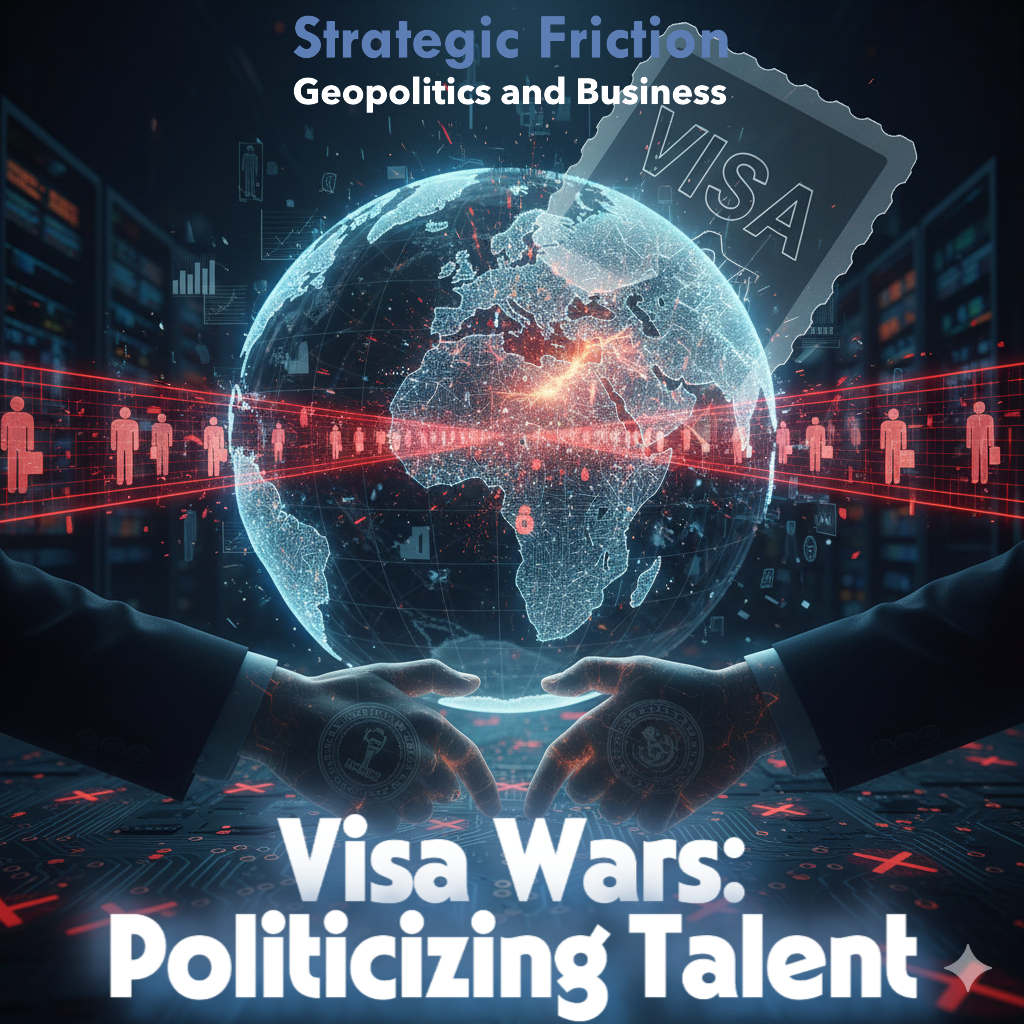
Silicon Nationalism: The Rise of the Visa Wars
How work Visas have become tools in the evolving world of high-stakes geopolitical risk.
2/24/20264 min read
Silicon Nationalism: The Rise of the Visa Wars
In 2026, the struggle for global dominance has pivoted from physical commodities like microchips and rare earth minerals to a far more volatile asset: human agency. While we once feared AI and robotics would make humans obsolete, the opposite has proven true. In a world saturated with synthetic content and automated systems, the humans capable of navigating, auditing, and orchestrating these tools have become the ultimate strategic resource. Information is now a commodity; the ability to manage it is the new premium skill.
The End of Frictionless Tech
The "Global Tech" era of frictionless movement has ended. In its place, we are seeing the rise of Silicon Nationalism. Governments have realized that controlling the "brains" of the industry—the talent that builds and governs AI—is as vital as controlling the physical borders.
For decades, immigration policy was a byproduct of economic cycles or domestic pressure—shifts that famously shaped the development of North America. But today, the era of open borders for high-value talent has hit a wall of resurgent nationalism.
Visas as the New Tariffs
As a result, while traditional tariffs continue to dominate news headlines, states are shifting their focus to the Weaponization of Visas. Governments are now explicitly using visa restrictions, administrative delays, and outright bans as diplomatic levers to:
Punish Rivals: Restricting travel for key engineers from competing nations.
Shore Up Domestic Industry: Forcing "Brain Gain" by offering selective fast-tracks for specific AI skill sets.
Consolidate Leverage: Using exit bans or vetting initiatives to turn skilled professionals into geopolitical pawns.
Skilled professionals are no longer just employees; they are geopolitical pawns. For a multinational business, a sudden "talent lockout"—where a lead engineer is denied entry or an executive is hit with a reciprocal travel ban—is no longer an HR headache. It is a core operational risk that can stall a $100M project overnight.
Key Shifts in the 2026 Talent War:
From Credentials to "Agency": Information is now a commodity; the ability to ask the right questions and manage AI "slop" is the new premium skill.
Administrative Friction: Governments are using "Administrative Delays" (vague security audits and social media scrubs) as a form of non-tariff barrier to slow down rival economies.
Strategic Redundancy: Companies are moving away from "single-hub" talent models, forced to hire "Shadow Teams" in politically neutral "Swing States" to ensure business continuity.
The Strat Friction Take: In 2026, your most valuable supply chain doesn't run through a port—it runs through the passport office.
When a Visa Becomes a Weapon
For decades, immigration policy was a byproduct of economic cycles or domestic pressure; shifts that famously shaped the development of North America. But the era of frictionless global mobility is over. After years of essentially open borders for high-value talent, a resurgent nationalism has forced a hard re-think on who gets access and who is locked out. Today, governments have moved beyond simple regulation: they are explicitly weaponizing visa restrictions, administrative delays, and outright bans as diplomatic levers to punish rivals, protect domestic industries, and consolidate their geopolitical leverage.
Consider these 2026 scenarios:
Targeted "Talent Lockouts": A major tech executive from a rival nation suddenly denied a work visa, not due to personal history, but as a direct response to a trade dispute.
"Reciprocal Restrictions": Country A restricts visas for engineers from Country B, which then retaliates by doing the same for Country A's financial analysts.
"National Security" Red Herrings: Visa applications from specific nationalities in sensitive tech sectors are indefinitely stalled under broad "national security" pretexts, effectively creating a talent blockade.
This isn't about protecting local jobs; it's about strategic talent denial and economic coercion.
The Friction: Your Supply Chain of Brains is Breaking
For businesses, the impact is devastating:
Project Stalling: A critical project, perhaps a new factory launch or a software update, grinds to a halt because the key engineers or project managers can't get into the country.
Innovation Drain: Companies struggle to bring in diverse global expertise, leading to less innovative teams and a reliance on potentially less skilled domestic pools.
Talent Migration to Stability: Top global talent, weary of the uncertainty, opts for countries with more predictable and open immigration policies, leaving "weaponized" nations at a disadvantage.
Increased Compliance Costs: Immigration becomes a complex geopolitical minefield, requiring dedicated legal teams to navigate rapidly changing regulations and politically motivated denials.
The Boardroom Question: How do you guarantee business continuity when your "human capital supply chain" is subject to diplomatic freezes and thawing?
Navigating the "Talent Battlefield"
The traditional HR playbook for global mobility is obsolete. Businesses need to adopt a geopolitical risk framework for talent:
Diversify Your Talent Sources: Over-reliance on talent from a single country or region is now a strategic weakness. Build robust talent pipelines from multiple nations.
"In-Country" Talent Development: Invest heavily in upskilling local workforces in key markets, reducing dependence on international transfers.
Geopolitical "Scenario Planning": Regularly assess the diplomatic relations between your key operational countries and anticipate potential visa restrictions. Have contingency plans for talent relocation or remote work alternatives.
Strategic Lobbying: Businesses must proactively engage with governments, highlighting the economic damage of restrictive visa policies and advocating for talent mobility as a driver of shared prosperity.
The Bottom Line
In 2026, immigration is no longer a bureaucratic inconvenience; it's a battleground. For Strat Friction readers, the message is stark: Your human capital is now on the front lines of geopolitics. Ignoring the "Visa Wars" means risking your most valuable asset.